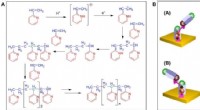
* Acids: Acids are defined by their ability to donate protons (H+ ions) in solution. Their strength is measured by how readily they donate those protons. Strong acids completely ionize in water, while weak acids only partially ionize.
* Lava: Lava is molten rock that is extremely hot (around 700-1200 °C or 1300-2200 °F). It's not an acid in the chemical sense.
So, how can we compare them?
* Not by strength: You can't directly compare the "strength" of an acid and lava. They are fundamentally different things.
* By effect: Lava is much more dangerous than any acid because of its extreme temperature and the fact that it's a massive, molten substance. Even a small amount of lava can cause severe burns and damage.
In summary:
* Acids: Measure their strength by their ability to donate protons.
* Lava: Is incredibly hot and dangerous due to its molten nature and high temperature.
Therefore, it's not a question of which is "stronger," but rather a question of which is more dangerous. Lava is much more dangerous than any acid.