The Urey-Miller experiment, conducted in 1952 by Stanley Miller and Harold Urey, provided strong evidence for the Oparin-Haldane theory. This experiment demonstrated that organic molecules could be formed abiotically from inorganic matter under conditions thought to exist on early Earth.
Here's a breakdown of the key components:
Oparin-Haldane Theory:
* Early Earth Conditions: The early Earth's atmosphere was thought to be very different from today's, with a reducing atmosphere rich in methane, ammonia, hydrogen, and water vapor.
* Primordial Soup: Oparin and Haldane proposed that over time, these inorganic molecules would have reacted to form simple organic molecules like amino acids and sugars. These organic molecules would have accumulated in a "primordial soup" in oceans or shallow ponds.
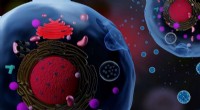
* Self-Assembly and Formation of Life: Over millions of years, these organic molecules would have self-assembled into more complex structures like proteins and nucleic acids (DNA and RNA). Eventually, these complex molecules would have been enclosed in membranes, forming the first primitive cells.
Urey-Miller Experiment:
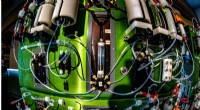
* Experimental Setup: Miller and Urey simulated the early Earth's atmosphere in a laboratory using a closed system containing water, methane, ammonia, and hydrogen. They subjected this mixture to electric sparks, simulating lightning.
* Results: After a week of running the experiment, they found that a significant number of organic molecules had formed, including amino acids, sugars, and other building blocks of life.
* Significance: The experiment showed that it is possible for organic molecules to form from inorganic matter under conditions that might have existed on early Earth. This provided strong evidence for the Oparin-Haldane theory.
Important Notes:
* The Urey-Miller experiment was groundbreaking but it's important to note that it was a simplified model of early Earth conditions. The actual atmosphere of early Earth and the conditions that led to the formation of life are still debated.
* The Oparin-Haldane theory and the Urey-Miller experiment are crucial stepping stones in understanding the origin of life. However, there are still many unanswered questions about how life arose from non-living matter.
Here are some key takeaways:
* The Oparin-Haldane theory proposes that life arose gradually from non-living matter in a series of steps.
* The Urey-Miller experiment provided strong evidence for the Oparin-Haldane theory by demonstrating the abiotic synthesis of organic molecules.
* There are still many unknowns about the origin of life, and the Oparin-Haldane theory and the Urey-Miller experiment are just starting points for our understanding.