1. Benedict's Test:
* Principle: Benedict's reagent contains copper(II) ions that are reduced to copper(I) oxide by reducing sugars. This results in a color change, indicating the presence of reducing sugar.
* Procedure:
* Prepare: Make up separate test tubes containing equal volumes of the two colorless solutions.
* Add Benedict's reagent: Add an equal volume of Benedict's reagent to each test tube.
* Heat: Place the test tubes in a hot water bath (around 80°C) for several minutes.
* Observation:
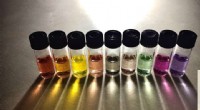
* High concentration: A solution with a higher concentration of reducing sugar will produce a more intense color change (from blue to green, yellow, orange, or red). The darker the color, the higher the concentration.
* Low concentration: A solution with a lower concentration of reducing sugar will produce a less intense color change, possibly only a slight green or yellow.
2. Quantitative Methods (for more precise measurements):
* Spectrophotometer:
* Use a spectrophotometer to measure the absorbance of the solutions at a specific wavelength (e.g., 540 nm) after the Benedict's test.
* Higher absorbance indicates a higher concentration of reducing sugar.
* Titration:
* Titrate the solutions with a standard solution of Benedict's reagent (or another oxidizing agent) to determine the amount of reducing sugar present.
Important Notes:
* Specificity: The Benedict's test is not specific to any particular reducing sugar. Other compounds (e.g., certain amino acids) can also cause a color change.
* Quantitative vs. Qualitative: The Benedict's test is qualitative, indicating the presence of reducing sugar. For more precise quantitative measurements, use a spectrophotometer or titration.
* Safety: Always wear appropriate safety goggles when working with chemicals like Benedict's reagent.
Let me know if you'd like more details on any specific method!