Here's a breakdown:
* Permeable: Allows all substances to pass through freely.
* Impermeable: Prevents all substances from passing through.
* Semipermeable: Selectively allows some substances to pass through while blocking others.
Examples of semipermeable membranes:
* Cell membranes: The outer layer of cells that controls what enters and exits the cell.
* Dialysis tubing: Used in medical treatments to filter blood.
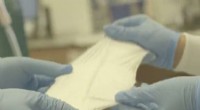
* Some types of plastic wrap: Allows moisture to escape while keeping food fresh.
Factors that determine permeability:
* Size of molecules: Smaller molecules can pass through more easily.
* Charge of molecules: Charged molecules may be repelled by the membrane.
* Solubility in lipids: Molecules that are soluble in lipids (fats) can pass through more easily.
Key processes that involve semipermeable membranes:
* Diffusion: Movement of molecules from an area of high concentration to low concentration.
* Osmosis: Movement of water across a semipermeable membrane from an area of high water concentration to low water concentration.
* Active transport: Movement of molecules against their concentration gradient, requiring energy.
Let me know if you'd like more information on any of these concepts!