Here's a breakdown of how it works:
1. Polarity: Water molecules are polar, meaning they have a slightly positive end (hydrogen atoms) and a slightly negative end (oxygen atom). This uneven distribution of charge creates a dipole moment.
2. Attraction: Polar substances also have dipoles. When a polar substance encounters water, the positive end of the water molecule attracts the negative end of the polar molecule, and vice versa. These attractions are called hydrogen bonds.
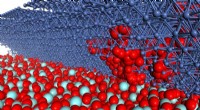
3. Solvation: The water molecules surround the polar molecules, effectively pulling them apart from each other. This process is called solvation, and it weakens the intermolecular forces holding the polar substance together.
4. Dissolution: As more water molecules surround and interact with the polar molecules, the substance breaks down into individual ions or molecules. This is what we observe as "dissolving".
In summary: The combination of water's polarity, the formation of hydrogen bonds, and the process of solvation allows polar substances to dissolve in water.
Important note: This process is different from how non-polar substances dissolve. Non-polar substances dissolve in non-polar solvents through a process called dispersion forces, which are weaker attractions.