The distribution of ions across the cell membrane is absolutely crucial for life. It's what allows cells to maintain their shape, generate electrical signals, transport nutrients, and eliminate waste. Here's a breakdown of key ions and their distribution:
Inside the Cell (Cytoplasm)
* Potassium (K+): The major intracellular cation, responsible for maintaining osmotic pressure and influencing nerve impulse transmission.
* Organic Anions (A-): These include proteins, phosphates, and other negatively charged molecules. They contribute to the overall negative charge inside the cell.
Outside the Cell (Extracellular Fluid)
* Sodium (Na+): The major extracellular cation, important for maintaining osmotic pressure and generating action potentials.
* Chloride (Cl-): The major extracellular anion, contributing to the balance of charges across the cell membrane.
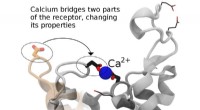
* Calcium (Ca2+): Plays a vital role in muscle contraction, neurotransmitter release, and cell signaling.
The Concentration Gradient
A key point to remember is that there's a significant difference in ion concentration across the cell membrane. This concentration gradient is essential for various cellular functions:
* Sodium-Potassium Pump: This active transport system constantly pumps sodium ions out of the cell and potassium ions in, maintaining the concentration gradient. This requires energy and is vital for nerve impulse transmission and maintaining cell volume.
* Action Potentials: The movement of ions across the cell membrane, driven by the concentration gradient, is the basis of nerve impulses.
* Osmosis: The movement of water across the membrane follows the movement of ions, maintaining cell volume.
Key Points to Remember:
* The specific concentrations of ions can vary depending on the cell type.
* The concentration gradient is constantly maintained by active transport systems like the sodium-potassium pump.
* This ionic imbalance is critical for cellular function, communication, and survival.
Further Reading:
* Cell Membrane: You can find more information about the cell membrane and its structure on Wikipedia: [https://en.wikipedia.org/wiki/Cell_membrane](https://en.wikipedia.org/wiki/Cell_membrane)
* Sodium-Potassium Pump: This active transport system is explained in detail on Khan Academy: [https://www.khanacademy.org/science/biology/human-biology/cells-and-tissues/a/the-sodium-potassium-pump](https://www.khanacademy.org/science/biology/human-biology/cells-and-tissues/a/the-sodium-potassium-pump)
* Action Potentials: Learn about the role of ions in nerve impulse transmission: [https://en.wikipedia.org/wiki/Action_potential](https://en.wikipedia.org/wiki/Action_potential)
Let me know if you have any specific questions about ions and their role in cellular function!