* Vacuum: The space between the two glass walls is almost completely evacuated, meaning there's very little air left inside. This vacuum acts as a barrier to heat transfer.
* Heat transfer: Heat can be transferred in three ways: conduction, convection, and radiation.
* Conduction: Heat transfer through direct contact. The vacuum significantly reduces conduction because there's very little material for heat to travel through.
* Convection: Heat transfer through the movement of fluids. The vacuum prevents convection since there's no air to circulate and carry heat.
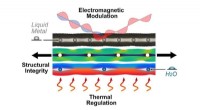
* Radiation: Heat transfer through electromagnetic waves. While some heat can still be transferred by radiation, the silver coating on the glass walls helps to reflect this radiation back into the flask.
In summary, the double glass with a vacuum in between acts as a highly effective barrier to heat transfer, keeping hot contents hot and cold contents cold for extended periods. This is why thermos flasks are so effective at maintaining the temperature of their contents.