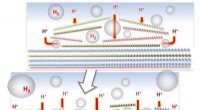
1. Electrostatic Attraction:
* Opposite Charges: The cathode is negatively charged due to the accumulation of electrons, while the anode is positively charged. Opposite charges attract each other. This fundamental electrostatic force drives the electrons towards the anode.
2. Potential Difference:
* Voltage: A voltage difference is applied across the electrodes, creating an electric field. This electric field exerts a force on the electrons, pushing them towards the higher potential (positive) anode.
3. Electron Mobility:
* Free Electrons: Electrons in the cathode are free to move due to the nature of the material. They are not bound to specific atoms and can easily respond to the electric field.
4. Conduction:
* Current Flow: When the circuit is complete, the electrons flow from the cathode to the anode, creating an electric current. This flow is driven by the potential difference and the electrostatic attraction between the cathode electrons and the anode.
In Summary:
The attraction of cathode electrons to the anode is a result of the fundamental electrostatic attraction between opposite charges, the driving force of the applied voltage difference, the mobility of electrons in the cathode, and the resulting flow of current. This process is essential for the operation of many electronic devices, including batteries, light bulbs, and electronic circuits.