* Atoms are incredibly tiny: You can't see an atom, let alone its nucleus, with the naked eye. Even powerful microscopes can only visualize very large molecules, not individual atoms.
* The nucleus is even smaller: The nucleus is the dense, positively charged center of an atom, containing protons and neutrons. It's much smaller than the entire atom, making it impossible to see directly.
* Many different nuclei exist: The nucleus of each element is different, containing a unique number of protons and neutrons. For example, a carbon nucleus has 6 protons and 6 neutrons, while a uranium nucleus has 92 protons and 146 neutrons. These different nuclei would look slightly different if we could see them.
So, what can we do?
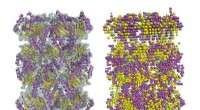
* Models: Scientists use models and diagrams to represent the structure of atoms and their nuclei. These models are based on our understanding of atomic structure and quantum mechanics.
* Simulations: Computer simulations can help visualize the interactions of particles within the nucleus, providing insights into its structure and behavior.
* Indirect observations: We can infer information about the nucleus by studying its interactions with other particles, like in particle accelerators.
In short, we can't see a "nuclear" directly, but we can use models, simulations, and indirect observations to understand its structure and behavior.