Here's a breakdown:
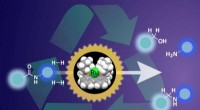
* Hydrogen Bonding: Ammonia molecules have a highly polar N-H bond. The nitrogen atom is more electronegative than hydrogen, creating a partial negative charge on the nitrogen and a partial positive charge on the hydrogen. These partial charges allow for strong dipole-dipole interactions, specifically hydrogen bonding. Hydrogen bonding is a particularly strong type of intermolecular force.
* Small Size: Ammonia is a small molecule, allowing the hydrogen bonds to be quite close together and strong.
* Other Factors: While hydrogen bonding is the primary contributor, other factors like Van der Waals forces also play a role in the boiling point of ammonia.
Comparison:
Consider methane (CH₄). It has a similar molecular weight to ammonia but lacks hydrogen bonding. Methane only has weak Van der Waals forces holding its molecules together, resulting in a much lower boiling point (-161.5 °C) compared to ammonia (-33.34 °C).
In summary: The unusually high boiling point of ammonia is mainly due to the strong hydrogen bonding between its molecules. This strong intermolecular force requires more energy to overcome, resulting in a higher boiling point.