General Principle:
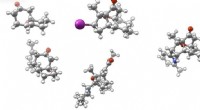
* Higher concentration = Faster reaction: The more molecules of reactants are present in a given volume, the more frequently they collide with each other. These collisions are essential for chemical reactions to occur.
Specifics:
* Collision Theory: This theory explains that reactions happen when reactant molecules collide with sufficient energy and the correct orientation. Increasing concentration increases the frequency of these effective collisions, leading to a faster reaction rate.
* Rate Law: The rate law for a reaction expresses the relationship between the rate of reaction and the concentration of reactants. For example, a simple rate law might look like:
* Rate = k[A]^m[B]^n
* Where:
* k = Rate constant (a constant for a specific reaction)
* [A], [B] = Concentrations of reactants A and B
* m, n = Reaction orders (typically determined experimentally)
* Higher values of m and n indicate greater dependence of the reaction rate on the concentration of the respective reactants.
Examples:
* Burning a piece of paper: A small piece of paper burns slowly because there's less surface area exposed to oxygen. A crumpled piece burns faster because the increased surface area exposes more paper to the oxygen, leading to more collisions and a faster reaction.
* Dissolving sugar in water: Sugar dissolves faster in hot water because the higher temperature increases the kinetic energy of water molecules, causing them to collide with the sugar molecules more frequently. This leads to faster dissolving.
Important Considerations:
* Reaction Order: The specific relationship between concentration and rate depends on the reaction order. A reaction can be first-order, second-order, or even zero-order with respect to a particular reactant.
* Equilibrium: While increasing concentration generally increases the rate of a reaction, it doesn't change the equilibrium constant (K). Equilibrium refers to the state where the rates of the forward and reverse reactions are equal.
* Catalysts: Catalysts speed up reactions without being consumed in the process. They work by providing an alternative pathway with a lower activation energy, which doesn't necessarily depend on concentration.
In summary: The concentration of reactants is a crucial factor influencing the rate of a chemical reaction. Higher concentration leads to more frequent collisions between reactant molecules, resulting in a faster reaction. The specific relationship between concentration and rate is defined by the reaction order.