Extracting metals from their ores involves a series of processes that aim to separate the desired metal from unwanted impurities. Here are some general methods:
1. Physical Separation Methods:
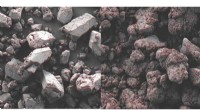
* Crushing and Grinding: Breaking down the ore into smaller particles to increase the surface area for further processing.
* Screening and Sorting: Separating particles based on size and density using screens, sieves, and magnetic separators.
* Gravity Separation: Using gravity to separate denser minerals from lighter ones. This can be achieved through techniques like jigging, tabling, and flotation.
* Magnetic Separation: Utilizing magnets to separate magnetic minerals from non-magnetic ones. This is particularly effective for ores containing iron.
2. Chemical Separation Methods:
* Froth Flotation: This method uses a mixture of water, air, and chemicals to selectively attach to the desired mineral particles, forming a froth that is skimmed off.
* Leaching: Dissolving the desired metal from the ore using a chemical solvent (e.g., acid or alkali). The metal can then be recovered from the solution.
* Electrolysis: Using electricity to separate the metal from its compounds in a solution. This is commonly used for extracting highly reactive metals like aluminum.
* Roasting: Heating the ore in air to remove impurities and convert the metal to a more easily processed form.
3. Smelting:
* Smelting: High-temperature melting process where the ore is heated with a reducing agent (e.g., coke) to separate the metal from the gangue (impurities). The molten metal is then collected and cooled. This method is widely used for extracting metals like copper, lead, and zinc.
4. Refining:
* Refining: Further purifying the extracted metal to improve its purity and properties. This can involve various methods like electrolytic refining, distillation, and zone refining.
Note: The specific methods used for extracting a metal from its ore depend on the specific metal and the characteristics of the ore. Some metals are easier to extract than others, and some ores require more complex processing methods.
Example:
Extracting iron from iron ore involves crushing and grinding the ore, followed by magnetic separation to remove non-magnetic impurities. Then, the concentrated iron ore is roasted to remove moisture and convert iron oxides to iron oxides. Finally, the roasted ore is smelted in a blast furnace with coke and limestone to produce pig iron. The pig iron is then further refined to produce steel.
This is a general overview of the methods used for extracting metals from their ores. There are many other details and variations involved in the specific processes for each metal.