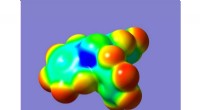
Here's why:
* Covalent bonds are formed when two atoms share electrons.
* Polar covalent bonds occur when the electrons are shared unequally, creating a slight positive charge on one atom and a slight negative charge on the other.
* Nonpolar covalent bonds occur when the electrons are shared equally between the atoms. This happens when the two atoms have similar electronegativities, meaning they have an equal tendency to attract electrons.
Examples of nonpolar covalent bonds:
* H-H (hydrogen gas)
* O=O (oxygen gas)
* Cl-Cl (chlorine gas)
Let me know if you have any other questions!