* Polarity: Sugar molecules (sucrose) are more polar than salt molecules (sodium chloride). This means they have a stronger attraction to water molecules, which are also polar. The stronger attraction leads to faster dissolution.
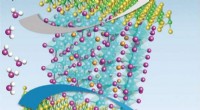
* Crystal Structure: Salt crystals have a tightly packed, cubic structure, making it harder for water molecules to penetrate and break apart the crystal. Sugar crystals have a looser, more open structure, allowing for easier interaction with water molecules.
* Temperature: Both salt and sugar dissolve faster at higher temperatures. This is because the increased kinetic energy of the water molecules makes it easier to break apart the solute molecules.
However, there are factors that can influence the rate of dissolution for both substances:
* Stirring: Stirring or agitation helps to bring fresh water molecules into contact with the solute, increasing the rate of dissolution for both salt and sugar.
* Particle Size: Smaller particles of salt and sugar will dissolve faster than larger particles. This is because there is more surface area exposed to the water.
* Concentration: As the concentration of salt or sugar in the water increases, the rate of dissolution slows down. This is because the water becomes saturated with the solute.
In conclusion: While sugar generally dissolves faster than salt in water, various factors can influence the speed of dissolution for both substances.