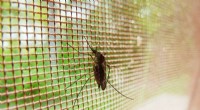
1. Observation: This is where you notice a phenomenon in the natural world that piques your curiosity. You might observe something unusual, something that contradicts existing knowledge, or simply something that you want to understand better.
2. Question: Based on your observation, you formulate a question that you want to answer. This question should be specific, measurable, and relevant to your observation.
3. Hypothesis: You propose a tentative explanation for the observation, a possible answer to your question. This hypothesis should be testable and falsifiable, meaning that there should be a way to prove it wrong through experimentation.
4. Prediction: Based on your hypothesis, you make specific predictions about what you expect to observe if your hypothesis is true. These predictions should be concrete and measurable.
5. Experiment: You design and conduct an experiment to test your predictions. This experiment should be controlled and repeatable, meaning that it should be designed to isolate the variable you are testing and should be able to be repeated by others to verify your results.
6. Analysis: You analyze the data collected from your experiment. This might involve statistical analysis, visualization of data, and comparison of your results to your predictions.
7. Conclusion: Based on your analysis, you draw a conclusion about whether your hypothesis is supported or refuted by the data. If the data supports your hypothesis, you may be able to draw stronger inferences about the phenomenon you are studying. If the data refutes your hypothesis, you may need to revise your hypothesis or design a new experiment.
8. Communication: You share your findings with the scientific community through publications, presentations, or other forms of communication. This allows other researchers to build upon your work, replicate your experiments, and further test your conclusions.
It's important to note that the scientific method is an iterative process, meaning that you may cycle back through these steps several times as you refine your understanding of the phenomenon you are studying. Each step can inform and influence the others, leading to a deeper understanding of the world around us.