1. Dissolving the Soluble Solid
* Water: The most common method is to use water as a solvent. Add enough water to the mixture to dissolve the soluble solid completely.
* Other Solvents: If the soluble solid doesn't dissolve in water, you might need to use a different solvent like ethanol, acetone, or hexane. Choose a solvent that dissolves the soluble solid but not the insoluble solid.
2. Filtration
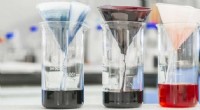
* Filter Paper: Use a filter paper (a porous paper) to separate the insoluble solid from the dissolved solution.
* Funnel: Place the filter paper in a funnel.
* Pouring: Carefully pour the mixture through the funnel. The insoluble solid will be trapped on the filter paper, while the dissolved solid will pass through.
3. Drying
* Evaporation: Allow the filtered solution to evaporate, leaving behind the soluble solid.
* Heating: You can speed up the process by gently heating the solution.
Example:
Imagine you have a mixture of sand (insoluble) and sugar (soluble).
1. Dissolve: Add water to the mixture and stir. The sugar will dissolve.
2. Filter: Pour the mixture through a filter paper. The sand will be caught on the filter paper, while the sugar solution will pass through.
3. Dry: Allow the sugar solution to evaporate, leaving behind the solid sugar crystals.
Key Points:
* This method relies on the difference in solubility between the two solids.
* Choose the appropriate solvent to dissolve the soluble solid without affecting the insoluble solid.
* Filtration is an essential step in separating the solid from the solution.
* You can recover both the insoluble solid and the soluble solid using this process.