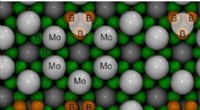
1. Hydrogen in Metals
* Palladium (Pd): Palladium is known to absorb large quantities of hydrogen gas, forming a solid solution called palladium hydride (PdH). This is a key property used in hydrogen storage and fuel cells.
* Nickel (Ni): Nickel can also absorb hydrogen, though not as effectively as palladium.
* Other Transition Metals: Many transition metals have the capacity to absorb hydrogen, forming solid solutions.
2. Oxygen in Metal Oxides
* Iron Oxide (FeO): In iron oxides, oxygen can be dissolved within the crystal lattice. This can affect the color and properties of the oxide.
* Other Metal Oxides: Many metal oxides, particularly those with mixed valences, can absorb oxygen, forming solid solutions.
3. Noble Gases in Solids
* Helium in Diamond: Under high pressure, helium can be dissolved in diamond, forming a solid solution.
* Xenon in Zeolites: Zeolites, which have a porous structure, can trap noble gases like xenon. This is used in gas separation technologies.
4. Nitrogen in Steel
* Nitrogen in Steel: Nitrogen can dissolve in steel, particularly austenitic stainless steel. This can improve the steel's strength and hardness.
5. Gases in Polymers
* Oxygen in Polyethylene: Polyethylene can absorb oxygen, which can lead to degradation of the polymer over time.
* Carbon Dioxide in Polymers: Some polymers can absorb carbon dioxide, which can be used for gas separation or carbon capture applications.
It's important to note that the solubility of a gas in a solid is highly dependent on factors such as:
* Temperature: Generally, solubility decreases with increasing temperature.
* Pressure: The solubility of a gas in a solid usually increases with increasing pressure.
* Nature of the gas and solid: The specific chemical and physical properties of the gas and solid will influence solubility.
Let me know if you'd like more information on a specific example!