Why it's challenging:
* Uniform distribution: Components in a homogeneous mixture are evenly distributed throughout, making it difficult to physically isolate them.
* Similar properties: The components often have very similar physical and chemical properties (e.g., boiling points, solubility), making traditional separation methods less effective.
Methods for Separating Components of Homogeneous Mixtures:
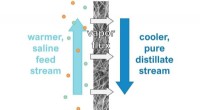
1. Distillation: This method relies on differences in boiling points. The mixture is heated, and the component with the lower boiling point vaporizes first, which is then condensed and collected separately. This is used to separate ethanol from water in alcoholic beverages.
2. Evaporation: If one component is more volatile (easily evaporates) than the other, evaporation can be used to separate them. The mixture is heated, the volatile component evaporates, and the less volatile component is left behind. For example, separating salt from saltwater.
3. Crystallization: If the components have different solubilities in a particular solvent, crystallization can be used. The mixture is dissolved in a solvent, and the component with lower solubility will crystallize out as the solution cools. This is often used to purify substances.
4. Chromatography: This technique separates components based on their different affinities for a stationary phase (a solid or liquid) and a mobile phase (a liquid or gas). The mixture is passed through the stationary phase, and the different components travel at different rates depending on their interactions. This is used to separate complex mixtures like dyes and pigments.
5. Filtration: While not typically used for homogeneous mixtures, filtration can be used if one component forms a precipitate (solid) that can be separated from the liquid phase by filtering.
Example:
Imagine a homogeneous mixture of salt and water. Here's how you could separate them:
* Evaporation: Heating the solution causes the water to evaporate, leaving the salt behind.
* Distillation: While not the most efficient, you could boil the mixture and collect the water vapor, which would condense back into pure water.
Important Note: The effectiveness of these separation methods depends on the specific components in the mixture and their properties.