Scientific instruments are tools designed to make measurements, analyze data, and facilitate scientific inquiry. They come in a vast array, each serving a unique purpose within specific fields of study. Here's a categorized overview:
1. Measurement and Observation Instruments:
* Microscope: Enlarges tiny objects for observation, crucial in biology, medicine, and materials science.
* Telescope: Collects and focuses light from distant objects, used in astronomy, space exploration, and navigation.
* Spectrometer: Analyzes the spectrum of light emitted or absorbed by a sample, providing information about its composition and structure.
* Thermometer: Measures temperature, vital in many scientific disciplines including chemistry, biology, and meteorology.
* Barometer: Measures atmospheric pressure, used in meteorology, aviation, and altitude determination.
* Scales/Balances: Measure mass and weight, crucial for chemistry, physics, and material science.
* Chronometer: Measures time with high precision, used in navigation, physics, and other time-sensitive applications.
2. Data Analysis and Processing Instruments:
* Computer: Analyzes data, runs simulations, and models scientific phenomena.
* Data Logger: Records data automatically from sensors, used in environmental monitoring, industrial processes, and scientific experiments.
* Spectrophotometer: Measures the absorption and transmission of light by a sample, providing information about its chemical composition and concentration.
* Chromatograph: Separates different components of a mixture, used in chemistry, biochemistry, and environmental analysis.
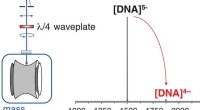
* Mass Spectrometer: Measures the mass-to-charge ratio of ions, providing information about the composition and structure of molecules.
3. Experimental Equipment:
* Centrifuge: Separates different components of a mixture based on their density, used in biology, chemistry, and materials science.
* Incubator: Provides controlled temperature and humidity for cultivating cells and microorganisms.
* Autoclave: Sterilizes equipment and materials using high-pressure steam.
* Electrode: Measures or applies electrical potential, used in electrochemistry, biology, and materials science.
* Reactor: Used to carry out chemical reactions under controlled conditions.
* Vacuum Chamber: Creates a low-pressure environment, used in various scientific disciplines including physics, chemistry, and materials science.
4. Imaging and Visualization Instruments:
* Scanning Electron Microscope (SEM): Produces high-resolution images of surfaces, used in materials science, biology, and nanotechnology.
* Transmission Electron Microscope (TEM): Provides images of the internal structure of materials at the nanoscale.
* Magnetic Resonance Imaging (MRI): Creates detailed images of the inside of the body, used in medical diagnosis and research.
* X-ray Diffraction (XRD): Determines the atomic structure of materials.
* Ultrasonic Imaging: Uses sound waves to create images of internal structures, used in medical diagnosis and industrial inspection.
5. Other Specialized Instruments:
* Particle Accelerators: Accelerate charged particles to high speeds, used in nuclear physics, particle physics, and medical treatments.
* Geiger Counter: Detects radiation, used in nuclear physics, environmental monitoring, and medical imaging.
* GPS Receiver: Determines location based on satellite signals, used in navigation, surveying, and geological research.
This is not an exhaustive list, but it provides a good starting point to understand the diversity of scientific instruments. Their development and application continue to push the boundaries of scientific discovery and technological advancement.
For further exploration, you can research specific instruments used in various scientific fields or explore online resources like the "Museum of Science and Industry" or "Science Museum" websites.