Why Pure Water Doesn't Conduct Electricity Well:
* Few Ions: Water (H₂O) is a very stable molecule. It doesn't easily break down into ions (charged particles) that can carry an electrical current.
* Weak Dissociation: A tiny fraction of water molecules do naturally dissociate into H⁺ (hydrogen ions) and OH⁻ (hydroxide ions), but this is not enough to create significant conductivity.
How Water Works as an Electrolyte in Electrolysis:
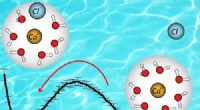
* Adding Electrolytes: To make water conduct electricity effectively, we add electrolytes (like salts, acids, or bases) to the water. These substances dissolve in water and release a large number of ions.
* Ions Carry the Current: The ions in the electrolyte solution are now free to move around. When an electrical current is applied, these ions flow through the solution, carrying the charge. This creates a pathway for the electricity to pass through.
* Electrolysis Reaction: The applied current provides energy to split the water molecules into hydrogen (H₂) and oxygen (O₂) gas. The electrodes provide surfaces for the gases to be collected.
In Summary:
* Pure water: Poor conductor due to low ion concentration.
* Electrolytes added: Increase ion concentration, making water a good conductor.
* Electrolysis: The electrical current splits water molecules into hydrogen and oxygen gas using the ions as charge carriers.
Let me know if you have any other questions about electrolysis!