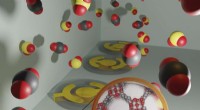
* Elements: A pure substance consisting of only one type of atom. Examples of gaseous elements include:
* Oxygen (O₂): Found in the air we breathe.
* Nitrogen (N₂): The most abundant gas in the atmosphere.
* Helium (He): Used in balloons and as a coolant.
* Neon (Ne): Used in neon signs.
* Argon (Ar): An inert gas, often used in light bulbs.
* Compounds: Substances formed when two or more different elements chemically combine in a fixed ratio. Examples of gaseous compounds include:
* Carbon dioxide (CO₂): A greenhouse gas produced by respiration and burning.
* Methane (CH₄): A potent greenhouse gas, often found in natural gas.
* Ammonia (NH₃): Used in fertilizers and cleaning products.
* Water vapor (H₂O): The gaseous form of water.
So, whether a gas is an element or a compound depends on its composition.