Understanding the Basics
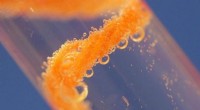
* Electrolysis: The process of splitting water (H₂O) into its component elements, hydrogen (H₂) and oxygen (O₂), using electricity.
* Hypothesis: A testable prediction about the outcome of an experiment. It should be specific, measurable, and based on some prior knowledge or observation.
Forming Your Hypothesis
1. Identify your independent and dependent variables:
* Independent variable: The factor you manipulate in the experiment (e.g., the voltage applied during electrolysis).
* Dependent variable: The factor you measure to see if it changes (e.g., the volume of hydrogen gas produced).
2. Consider your background research:
* What do you already know about electrolysis?
* What factors might influence the rate or amount of hydrogen and oxygen produced?
* You could look into:
* Voltage: Higher voltage could lead to faster production of gas.
* Electrode material: Different metals might have different efficiencies in splitting water.
* Electrolyte solution: The type and concentration of the solution (e.g., salt water, baking soda solution) could impact the process.
3. Formulate a prediction: Based on your research, make a specific statement about how the independent variable will affect the dependent variable.
Example Hypotheses
Here are some example hypotheses you could use, but remember to adjust them based on your specific experiment:
* Hypothesis 1: "If the voltage applied during electrolysis is increased, then the volume of hydrogen gas produced will also increase."
* Hypothesis 2: "If carbon electrodes are used for electrolysis instead of copper electrodes, then the rate of hydrogen gas production will decrease."
* Hypothesis 3: "If the concentration of salt in the water used for electrolysis is increased, then the rate of oxygen gas production will increase."
Important Notes
* Make it testable: Your hypothesis should be something you can test through your experiment.
* Keep it simple: A well-crafted hypothesis is concise and straightforward.
* Be specific: Avoid using vague terms like "more" or "less." Quantify your predictions whenever possible (e.g., "twice as much," "5% faster").
Good luck with your science project!