Homogeneous Reaction:
* All reactants and products are in the same phase. This could be:
* All gases (e.g., the combustion of methane: CH₄(g) + 2O₂(g) → CO₂(g) + 2H₂O(g))
* All liquids (e.g., the reaction of ethanol and water: CH₃CH₂OH(l) + H₂O(l) → CH₃CH₂OH(aq))
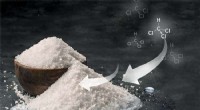
* All solids (e.g., the reaction of solid sodium and chlorine: 2Na(s) + Cl₂(s) → 2NaCl(s))
* Reaction occurs throughout the entire mixture. There are no distinct boundaries between reactants.
* Generally faster due to easier mixing and interaction of molecules.
Heterogeneous Reaction:
* Reactants and products are in different phases. This could be:
* Gas-solid (e.g., the burning of wood: C(s) + O₂(g) → CO₂(g))
* Liquid-solid (e.g., the dissolving of sugar in water: C₁₂H₂₂O₁₁(s) + H₂O(l) → C₁₂H₂₂O₁₁(aq))
* Liquid-liquid (e.g., the extraction of oil from soybeans)
* Gas-liquid (e.g., the absorption of carbon dioxide in water: CO₂(g) + H₂O(l) → H₂CO₃(aq))
* Reaction occurs only at the interface between the phases. This creates a surface area limitation.
* Generally slower due to the need for molecules to overcome phase boundaries to interact.
Here's a table summarizing the key differences:
| Feature | Homogeneous Reaction | Heterogeneous Reaction |
|---|---|---|
| Phase | All reactants and products in the same phase | Reactants and products in different phases |
| Reaction Location | Throughout the mixture | At the interface between phases |
| Rate | Generally faster | Generally slower |
| Examples | Combustion of methane, dissolving sugar in water | Burning of wood, dissolving calcium carbonate in acid |
Understanding these differences is crucial in predicting reaction rates, designing reactors, and analyzing chemical processes.