Here's how it works:
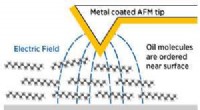
* The nucleus is positively charged: This positive charge creates an electric field that extends outwards.
* Electrons are negatively charged: They are attracted to regions of positive charge.
* Nearby electrons are pulled towards the nucleus: This attraction can be strong enough to hold electrons in place, forming chemical bonds between atoms.
The strength of this attraction depends on:
* The number of protons in the nucleus: More protons mean a stronger positive charge and a stronger attraction.
* The distance between the nucleus and the electron: The closer the electron is to the nucleus, the stronger the attraction.
Key takeaway: The nucleus doesn't "want" anything, but it exerts a powerful force that pulls electrons towards it, which is a fundamental part of how atoms bond together and form molecules.