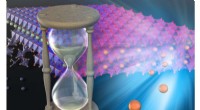
* Atoms: Atoms are the fundamental building blocks of all matter. Everything you see, touch, or smell is made up of atoms. They consist of a nucleus (containing protons and neutrons) surrounded by electrons.
* Molecules: Molecules are formed when two or more atoms bond together. These bonds can be strong or weak, and the arrangement of atoms within a molecule determines its properties.
Examples:
* Water (H₂O): A molecule made up of two hydrogen atoms and one oxygen atom.
* Iron (Fe): Although iron is a solid metal, it is still made up of individual iron atoms.
* Air: A mixture of gases, primarily nitrogen (N₂) and oxygen (O₂), both of which are molecules.
* Wood: Composed of complex organic molecules made up of carbon, hydrogen, and oxygen atoms.
Exceptions:
* Plasma: A state of matter where electrons are stripped from atoms, creating charged particles. While plasma is still made up of the same fundamental particles (protons, neutrons, electrons), it doesn't exist in the same form as atoms or molecules.
* The Vacuum of Space: Although space is mostly empty, it contains a very small amount of matter, including hydrogen atoms and other particles.
In summary: Atoms and molecules are the building blocks of all matter, with the exception of plasma and the near-perfect vacuum of space.