* It's the main light-absorbing pigment: Chlorophyll a absorbs light most strongly in the blue and red wavelengths, which are the most important for photosynthesis. This absorption allows the plant to capture energy from sunlight, which is essential for producing glucose.
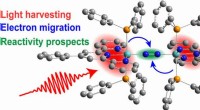
* It directly participates in the light-dependent reactions: Chlorophyll a is located in the photosystems of chloroplasts, where it plays a crucial role in the light-dependent reactions of photosynthesis. When light strikes the chlorophyll a molecules, electrons are energized and move through an electron transport chain, ultimately leading to the production of ATP and NADPH.
* Other pigments transfer energy to chlorophyll a: Many other pigments, such as chlorophyll b and carotenoids, absorb light at different wavelengths and transfer the energy to chlorophyll a. This broadens the range of light that can be utilized for photosynthesis.
* Evolutionary significance: Chlorophyll a is the most ancient and widespread photosynthetic pigment. It's found in all photosynthetic organisms, from bacteria to plants and algae.
In short, chlorophyll a is the key player in capturing sunlight energy and initiating the photosynthetic process. While other pigments contribute to capturing light energy, chlorophyll a is the central molecule that drives the light-dependent reactions and ultimately allows plants to produce food.