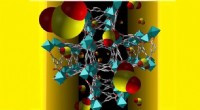
* Solid State: In ionic compounds, ions are held together in a crystal lattice by electrostatic forces. This is the most common way to find ions. Examples include table salt (NaCl), potassium chloride (KCl), and calcium carbonate (CaCO3).
* Liquid State: When ionic compounds dissolve in water, the ions separate and become surrounded by water molecules. These dissolved ions can freely move, making the solution conductive. This is why solutions of salts are electrolytes.
* Gas State: While less common, ions can also exist in the gas phase. For example, the air we breathe contains ions like O2-, N2+, and NO3-. These ions are formed when molecules are exposed to high energy sources like radiation or electrical discharges.
Important Note: It's not correct to say that ions *exist* in a gas state. It's more accurate to say that charged particles exist in a gas state. These charged particles can be individual ions, or they can be molecules with a net charge (like the O2- and N2+ examples).
So, while ions are most commonly found in solids and liquids, they can definitely exist in gaseous states as well!