* Water is a polar molecule: The oxygen atom in water has a higher electronegativity than the hydrogen atoms, meaning it attracts electrons more strongly. This creates a partial negative charge on the oxygen atom and partial positive charges on the hydrogen atoms.
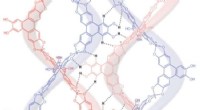
* Hydrogen bonding: The partial positive charges on hydrogen atoms in one water molecule attract the partial negative charges on oxygen atoms in other water molecules, forming hydrogen bonds.
* Ionization: These strong hydrogen bonds can break and reform, causing water molecules to dissociate into hydrogen ions (H+) and hydroxide ions (OH-).
These ions are crucial for many chemical reactions in living organisms and in the environment. For example:
* Acids: Release H+ ions when dissolved in water.
* Bases: Release OH- ions when dissolved in water.
* Enzymes: Many enzymes rely on the presence of these ions to function properly.
* Cellular processes: Many cellular processes, like photosynthesis and respiration, depend on the movement of ions across cell membranes.
So, water's polarity, leading to its ability to form hydrogen bonds and dissociate into ions, is a fundamental property that makes life possible.