Non-metals:
* Oxygen: Radium reacts vigorously with oxygen to form radium oxide (RaO).
* Halogens: It reacts with halogens (fluorine, chlorine, bromine, iodine) to form radium halides (e.g., RaF2, RaCl2).
* Hydrogen: It reacts with hydrogen to form radium hydride (RaH2).
* Nitrogen: At high temperatures, it reacts with nitrogen to form radium nitride (Ra3N2).
* Sulfur: Radium reacts with sulfur to form radium sulfide (RaS).
* Phosphorus: Radium reacts with phosphorus to form radium phosphide (Ra3P2).
* Carbon: Radium reacts with carbon to form radium carbide (RaC2).
Other elements:
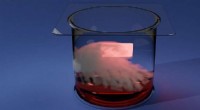
* Water: Radium reacts violently with water, producing radium hydroxide (Ra(OH)2) and hydrogen gas.
* Acids: Radium reacts with acids to form radium salts and hydrogen gas.
It's important to note that due to its high radioactivity and reactivity, radium is extremely dangerous and should never be handled without proper safety precautions.