* Kinetic energy: This is the energy of motion, given to the resulting daughter nuclei and any emitted particles.
* Electromagnetic radiation: This can include gamma rays (high-energy photons) and sometimes X-rays.
* Neutrinos: These are very low-mass particles that carry away some energy.
The specific form and amount of energy released depends on the type of nuclear reaction occurring. Some common examples include:
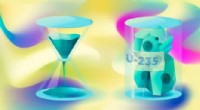
* Nuclear fission: The splitting of a heavy nucleus into two or more lighter nuclei. This releases a large amount of energy.
* Nuclear fusion: The joining of two light nuclei into a heavier nucleus. This also releases a large amount of energy, even more than fission.
* Radioactive decay: The spontaneous transformation of an unstable nucleus into a more stable one. This releases energy in the form of alpha particles, beta particles, gamma rays, or other particles.
In summary, the energy released when an atomic nucleus divides is a crucial part of nuclear reactions and plays a role in various applications, from nuclear power plants to medical imaging.