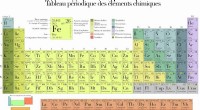
* From what atom or molecule are we removing electrons? The ionization energy (energy required to remove an electron) varies greatly between different elements.
* What is the purpose of removing electrons? Removing electrons can lead to different outcomes:
* Forming ions: This can be useful in chemical reactions or in forming ionic compounds.
* Creating free radicals: These are highly reactive species that can participate in various chemical processes.
* Changing the electrical conductivity of a material: Removing electrons can create holes, which contribute to electrical conductivity in semiconductors.
Therefore, it is impossible to say whether removing two electrons is "best" without more information.
Here are some examples to illustrate:
* Removing two electrons from a sodium atom (Na) is energetically favorable and results in the formation of a stable Na²⁺ ion. This is because sodium readily loses its outer electron to achieve a stable electron configuration.
* Removing two electrons from a helium atom (He) is very difficult and requires a large amount of energy. Helium has a very stable electron configuration, making it extremely resistant to losing electrons.
In conclusion, the "best" number of electrons to remove depends entirely on the specific atom or molecule, the desired outcome, and the surrounding conditions.