Here's a breakdown of its key features and functions:
Key Features:
* Location: Embedded in the thylakoid membrane, which is the internal membrane system within chloroplasts.
* Structure: Consists of a core complex with various protein subunits and pigments, including chlorophyll and carotenoids.
* Pigment Arrangement: The pigment molecules are organized into a light-harvesting antenna complex that absorbs light energy efficiently.
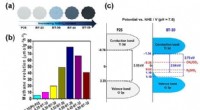
* Reaction Center: Contains a special pair of chlorophyll molecules called P680, which absorbs light maximally at 680 nm.
Functions:
1. Light Absorption: PSII absorbs light energy, primarily in the red and blue wavelengths, using its pigment molecules.
2. Water Splitting: The absorbed light energy is used to split water molecules (H2O). This process releases electrons, protons (H+), and oxygen (O2) as a byproduct.
3. Electron Transfer: The electrons released from water are passed through a series of electron carriers within PSII and ultimately transferred to photosystem I (PSI).
4. Proton Gradient: The release of protons during water splitting contributes to the proton gradient across the thylakoid membrane, which is essential for ATP synthesis.
5. Oxygen Production: The oxygen produced as a byproduct of water splitting is released into the atmosphere.
Overall, PSII acts as the initial energy-capturing and water-splitting component of photosynthesis, providing electrons and protons that are essential for the subsequent reactions of photosynthesis.
In summary, PSII is the key player in the light-dependent reactions of photosynthesis, capturing light energy, splitting water molecules, and setting the stage for ATP and NADPH production.