1. Burning Test:
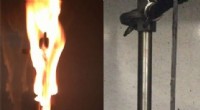
* Procedure: Hold a burning splint or match near the mouth of a test tube containing the gas.
* Observation: Hydrogen gas burns with a pale blue flame.
* Caution: This test should be performed with caution, as hydrogen gas is highly flammable and can explode if mixed with air in a certain ratio.
2. Pop Test:
* Procedure: Hold a test tube containing the gas upside down and bring a burning splint to the open end of the tube.
* Observation: A squeaky "pop" sound is produced if the gas is hydrogen. This is due to the rapid combustion of hydrogen with the oxygen in the air.
3. Reduction of Copper Oxide:
* Procedure: Pass the gas over heated black copper oxide.
* Observation: The black copper oxide will turn reddish-brown as it is reduced to copper metal.
* Chemical Equation: CuO + H2 → Cu + H2O
4. Reaction with Chlorine:
* Procedure: Mix hydrogen gas with chlorine gas in a test tube.
* Observation: The gases will react explosively to form hydrogen chloride (HCl) gas.
* Caution: This reaction should be carried out in a fume hood as hydrogen chloride gas is a corrosive and toxic gas.
5. Solubility in Water:
* Procedure: Bubble hydrogen gas through water.
* Observation: Hydrogen gas is only slightly soluble in water, so it will largely escape as bubbles.
It's important to note that these tests should be conducted in a safe environment and under the supervision of a trained professional.