1. Crystallographic Orientation:
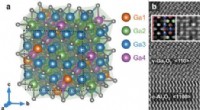
* Similar orientations: If the crystals have similar crystallographic orientations, they might grow together seamlessly, forming a larger, single crystal. This is called epitaxial growth.
* Different orientations: If the orientations differ, the crystals might grow independently, with a defined boundary between them. This is known as twinned growth or intergrowth.
2. Chemical Composition and Growth Conditions:
* Same chemical composition: Crystals of the same chemical composition can merge and form a single crystal with a larger size.
* Different chemical compositions: Crystals with different compositions might intergrow, forming a composite structure. This can result in interesting physical properties, like those observed in some minerals.
* Growth rate: The growth rate of each crystal can affect how they interact. A faster-growing crystal might "overgrow" the slower-growing one.
3. Morphology and Size:
* Shape and size: The shape and size of the crystals influence how they interact. Two large crystals might have limited space to grow together, while smaller crystals can readily intergrow.
Possible Outcomes:
* Merged crystals: Two crystals fuse into a single, larger crystal with a continuous lattice structure.
* Twinned crystals: Two crystals grow together with a specific symmetrical relationship between their crystallographic axes.
* Intergrowth: Crystals grow together with a distinct boundary between them, maintaining their individual identities.
* Growth inhibition: One crystal might hinder the growth of the other, leading to a deformed shape or incomplete growth.
* Competitive growth: Crystals might compete for resources, leading to uneven growth or the suppression of one crystal.
Examples:
* Quartz crystals: Often show twinning, where two crystals intergrow with a specific symmetrical relationship.
* Salt crystals: Can grow together in a cubic shape, forming a larger crystal with a continuous lattice.
* Diamond crystals: Can exhibit different growth habits, leading to intergrowths with various shapes and sizes.
Understanding the interaction between growing crystals is crucial in various fields, including:
* Material science: To control the growth of crystals with desired properties.
* Gemology: To understand the formation of gemstones and their unique characteristics.
* Mineralogy: To study the formation and properties of minerals in the Earth's crust.
In conclusion, the interaction between two growing crystals can be a complex process with various outcomes. It depends on the crystallographic orientation, chemical composition, and growth conditions. Understanding these interactions is crucial for various scientific and technological applications.