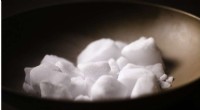
* Melting: When a solid melts, it transitions into a liquid. The molecules in the solid are held tightly together, but with added heat energy, they gain enough energy to break free from their rigid structure and move around more freely. The chemical makeup of the substance remains the same, it's just now in a different state.
* Boiling: When a liquid boils, it transitions into a gas. Again, the molecules absorb enough heat energy to overcome the forces holding them together in the liquid state. They become spread further apart and move with greater freedom. The substance's chemical composition remains unchanged.
Key takeaways:
* No new substances are formed: Both boiling and melting are reversible processes. You can freeze a liquid back into a solid and condense a gas back into a liquid, which wouldn't be possible if a chemical change occurred.
* Chemical bonds are not broken: The basic building blocks of the substance (atoms and molecules) remain the same. They just change their arrangement and energy levels.
In contrast, chemical changes involve the formation of new substances with different properties. Burning wood, for example, produces ash, smoke, and gases—all completely different substances from the original wood.