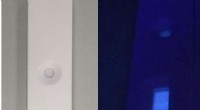
Factors influencing the size of the indication:
* Discontinuity size and shape:
* Larger discontinuities tend to produce larger indications, but this is not always a direct correlation. A long, narrow crack might produce a shorter, more defined indication than a smaller, round void.
* Penetrant properties:
* Penetrant viscosity plays a crucial role. Thicker penetrants may struggle to penetrate smaller, tighter discontinuities, resulting in smaller indications.
* Cleaning process:
* Inadequate cleaning can lead to the formation of "false indications" that may be larger than the actual discontinuity.
* Developer properties:
* Developer thickness can affect the size of the indication. Thicker developers can "build up" around the discontinuity, making the indication appear larger.
* Surface condition:
* Rough surfaces can trap penetrant, creating larger indications than expected.
* Inspection technique:
* Improper application of penetrant or developer can result in misleading indications.
General relationship:
* Smaller discontinuities: Generally, smaller discontinuities will produce smaller indications. However, small discontinuities can be difficult to detect if the penetrant cannot fully enter them.
* Larger discontinuities: Larger discontinuities generally produce larger indications. However, the size of the indication may not be directly proportional to the size of the discontinuity.
* Open discontinuities: Open discontinuities, such as cracks and voids, are more likely to produce larger indications than closed discontinuities.
Important notes:
* Size alone is not conclusive: While the size of the indication can be an indicator, it's crucial to consider the other factors mentioned above.
* Further investigation: It's often necessary to perform further investigation, such as using other NDT methods, to accurately determine the size and nature of the discontinuity.
In summary, the size of a liquid penetrant indication is often related to the size of the discontinuity, but the relationship is not always straightforward and can be influenced by various factors. Always consider these factors when evaluating the results of a liquid penetrant inspection.