Solid State
* Molecular Motion: Molecules in a solid are tightly packed and vibrate in fixed positions. They have very limited translational motion (moving from one place to another) and rotational motion (spinning).
* Structure: Solids have a definite shape and volume due to the strong intermolecular forces holding the molecules together in a rigid structure.
* Example: Ice, salt crystals, a piece of metal.
Liquid State
* Molecular Motion: Molecules in a liquid are close together but have more freedom to move around than in a solid. They have both translational and rotational motion, allowing them to flow and take the shape of their container.
* Structure: Liquids have a definite volume but not a definite shape. The intermolecular forces are weaker than in solids, allowing for more freedom of movement.
* Example: Water, oil, mercury.
Gaseous State
* Molecular Motion: Molecules in a gas are far apart and move freely. They have high translational and rotational motion, moving rapidly and colliding frequently.
* Structure: Gases have neither a definite shape nor a definite volume. They expand to fill their container. The weak intermolecular forces allow for very little interaction between gas molecules.
* Example: Air, helium, oxygen.
Key Points:
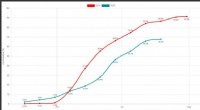
* Temperature and Molecular Motion: As the temperature of a substance increases, the molecules have more kinetic energy and move faster. This increased motion can cause a change in the state of matter.
* Intermolecular Forces: The strength of intermolecular forces between molecules plays a significant role in determining the state of matter. Strong forces (like in solids) restrict movement, while weaker forces (like in gases) allow for greater freedom of movement.
Let me know if you'd like to explore any of these concepts in more detail!