Factors influencing reactivity:
* Electronegativity: This refers to an atom's tendency to attract electrons. Highly electronegative atoms are more likely to form bonds and react with other atoms.
* Ionization energy: This is the energy required to remove an electron from an atom. Elements with low ionization energy are more likely to lose electrons and participate in reactions.
* Electron affinity: This is the energy change when an electron is added to a neutral atom. Elements with high electron affinity readily accept electrons, increasing reactivity.
* Bond strength: Strong bonds require more energy to break, making the molecule less reactive. Conversely, weak bonds are more easily broken, leading to higher reactivity.
* Presence of functional groups: Certain functional groups (like hydroxyl, carboxyl, or amino groups) make molecules more reactive due to their ability to form bonds with other molecules.
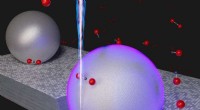
* Surface area: Increased surface area allows for more contact points for reactions, leading to increased reactivity.
* Temperature: Higher temperatures generally increase the rate of reactions, as molecules have more kinetic energy and are more likely to collide and react.
* Presence of catalysts: Catalysts speed up reactions without being consumed themselves, making them more likely to occur.
* Physical state: Gases tend to be more reactive than liquids or solids because their molecules are more dispersed and have more collisions.
Examples:
* Metals: Alkali metals (like lithium, sodium, potassium) are highly reactive due to their low ionization energy. They readily lose electrons to form positive ions.
* Nonmetals: Halogens (like fluorine, chlorine, bromine) are highly reactive because of their high electronegativity and strong tendency to gain electrons.
* Organic compounds: Hydrocarbons with multiple double or triple bonds are more reactive due to the presence of electron-rich pi bonds.
It's important to remember that:
* Reactivity is relative: A substance that's highly reactive in one scenario might be unreactive in another.
* Reactivity can change: Factors like temperature, pressure, and the presence of catalysts can alter the reactivity of a substance.
Therefore, rather than specific "properties," think of reactivity as a complex interplay of factors that determine how readily a substance participates in chemical reactions.