Initial Stages:
* Dehydration: Sugar molecules lose water (H₂O) molecules, leading to the formation of caramels, which are complex mixtures of various compounds. This process is responsible for the browning observed during caramelisation.
* Decomposition: Further heating breaks down caramels into simpler compounds like furfural, hydroxymethylfurfural (HMF), and levoglucosan. These compounds contribute to the aroma and flavour of the resulting product.
Later Stages:
* Charring: Continued heating leads to the formation of charcoal (carbon) and volatile organic compounds. These compounds can be flammable and contribute to the smoke produced during the process.
* Gas Production: Gases like carbon dioxide (CO₂) and carbon monoxide (CO) are released as the sugar molecule breaks down completely.
Overall:
The specific products and their proportions depend on the temperature, heating time, and the type of sugar used. However, the general outcome is a complex mixture of organic compounds, including:
* Caramels
* Furfural
* HMF
* Levoglucosan
* Charcoal
* Volatile organic compounds
Note:
* The inert atmosphere is crucial to prevent oxidation, which would lead to different products.
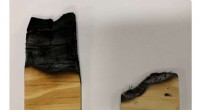
* This process is similar to how wood is converted into charcoal.
* The resulting "sugar char" can be used in various applications like activated carbon production and as a soil amendment.
Safety:
Heating sugar in an inert atmosphere can produce flammable gases and volatile organic compounds. Therefore, it's essential to perform the process in a well-ventilated area and with appropriate safety precautions.