1. Understand the Concepts
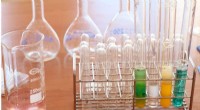
* Buffer Solutions: Buffer solutions resist changes in pH when small amounts of acid or base are added. They consist of a weak acid and its conjugate base (or a weak base and its conjugate acid).
* Henderson-Hasselbalch Equation: This equation relates the pH of a buffer solution to the pKa of the weak acid and the ratio of the concentrations of the acid and its conjugate base:
pH = pKa + log ([conjugate base]/[acid])
* HCl (Hydrochloric Acid): A strong acid that will react with the acetate ion (the conjugate base) in the buffer, shifting the equilibrium and lowering the pH.
2. Gather Information
* pKa of Acetic Acid: The pKa of acetic acid is 4.74.
* Desired pH: 3.88
* Initial Concentrations:
* [Acetic Acid] = 2.0 M
* [Acetate] = (We need to figure this out)
* Volume of Buffer: 1.00 L
3. Set up the Calculation
* Find the Initial Acetate Concentration:
* We know the desired pH and the pKa. We can use the Henderson-Hasselbalch equation to find the ratio of acetate to acetic acid:
* 3.88 = 4.74 + log ([acetate]/[acetic acid])
* Solve for the ratio: [acetate]/[acetic acid] = 0.138
* Since [acetic acid] = 2.0 M, then [acetate] = 0.138 * 2.0 M = 0.276 M
* Calculate the Moles of HCl Needed:
* The reaction between HCl and acetate is:
HCl + CH3COO- -> CH3COOH + Cl-
* For every mole of HCl added, one mole of acetate is consumed and one mole of acetic acid is formed.
* Let 'x' represent the moles of HCl added.
* After adding HCl:
* [acetic acid] = 2.0 M + x
* [acetate] = 0.276 M - x
* Use the Henderson-Hasselbalch equation again with the new concentrations:
3.88 = 4.74 + log ((0.276 - x)/(2.0 + x))
* Solve for 'x': x = 0.153 moles
4. Calculate the Mass of HCl
* Molar Mass of HCl: 36.46 g/mol
* Mass of HCl: 0.153 moles * 36.46 g/mol = 5.58 g
Answer: You need to add approximately 5.58 grams of HCl gas to the buffer solution to achieve a pH of 3.88.
Important Note: This calculation assumes ideal conditions. In practice, it's very difficult to safely and accurately add HCl gas directly to a solution. It's much safer to use a standard solution of HCl with a known concentration to achieve the desired pH.