* Anthocyanins change color with pH: Anthocyanins are water-soluble pigments that are found in many plants, including red cabbage. Their color changes depending on the acidity (pH) of their surroundings.
* A wide range of color changes: In acidic solutions (low pH), anthocyanins become red or pink. As the solution becomes more basic (high pH), they turn purple, blue, or green. This provides a visual indicator of the pH range.
* Easy to use: Red cabbage is readily available and easy to extract the anthocyanin pigment. Simply boiling red cabbage leaves in water produces a solution that can be used as a pH indicator.
Here's how it works:
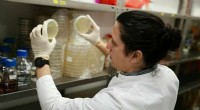
1. Extraction: Boiling red cabbage releases the anthocyanins from the plant cells into the water.
2. Color change: When you add this solution to a substance, the anthocyanins react with the hydrogen ions (H+) present. The higher the concentration of H+ (lower pH), the more red the solution becomes. Conversely, lower concentrations of H+ (higher pH) lead to a more blue or green color.
Other benefits of using red cabbage as a pH indicator:
* Natural: It's a non-toxic and environmentally friendly alternative to synthetic pH indicators.
* Cost-effective: Red cabbage is inexpensive and readily available.
* Educational: It's a fun and engaging way to teach about pH and acid-base chemistry.
So, red cabbage provides a simple, visual, and effective way to understand the concept of pH and its effect on the color of solutions.