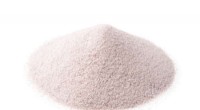
1. Solid: Has a definite shape and volume. The particles are tightly packed and vibrate in fixed positions.
2. Liquid: Has a definite volume but takes the shape of its container. The particles are close together but can move around freely.
3. Gas: Has no definite shape or volume and fills its container. The particles are far apart and move randomly.
The chemical property of a substance that determines its state is the strength of the intermolecular forces between its particles.
* Strong intermolecular forces: Lead to solids, where particles are tightly held together.
* Moderate intermolecular forces: Lead to liquids, where particles can move around but still experience attraction.
* Weak intermolecular forces: Lead to gases, where particles are far apart and have minimal attraction.
Factors influencing intermolecular forces:
* Type of molecule: Polar molecules have stronger forces than nonpolar molecules.
* Molecular size: Larger molecules have stronger forces due to increased surface area.
* Temperature: Increased temperature weakens intermolecular forces, favoring the liquid or gas state.
* Pressure: Increased pressure can force particles closer together, favoring the solid or liquid state.