* Ions: Atoms or molecules that have gained or lost electrons, giving them a positive or negative charge.
* Free Ions: Ions that are not bound to a specific location and can move freely within the liquid.
How it works:
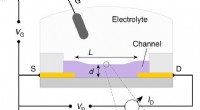
1. Electrolyte: A liquid containing free ions is called an electrolyte.
2. Voltage: When a voltage is applied across an electrolyte, the electric field causes the positively charged ions to move towards the negative terminal and the negatively charged ions to move towards the positive terminal.
3. Current Flow: This movement of charged particles constitutes an electric current.
Examples:
* Saltwater: Dissolved salt (NaCl) dissociates into Na+ and Cl- ions, allowing current to flow.
* Battery Acid: Sulfuric acid (H2SO4) in a car battery produces H+ and SO42- ions, facilitating current flow.
* Molten Salts: When salts are melted, they become electrolytes and can conduct electricity.
Important Note:
Not all liquids conduct electricity. Pure water, for instance, has very few free ions and is a poor conductor.