Pictures:
Strengths:
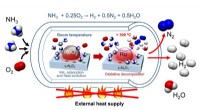
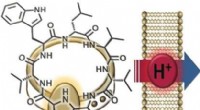
* Visual: Pictures provide a visual representation of molecules, which can be easier to understand than abstract formulas.
* Spatial relationships: They show the three-dimensional arrangement of atoms within a molecule, which is crucial for understanding chemical behavior.
* Complexity: Pictures can represent very complex molecules, including those with multiple functional groups and stereochemistry.
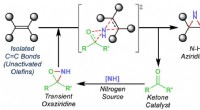
* Intuitive: They can be helpful for visualizing chemical reactions and the interactions between molecules.
Weaknesses:
* Limited information: Pictures often don't explicitly show the types of atoms or bonds present in a molecule.
* Abstraction: They can be simplified representations and may not accurately reflect the true size or shape of a molecule.
* Difficulty to draw: Drawing complex molecules can be time-consuming and require specialized software.
Chemical Formulas:
Strengths:
* Concise: Formulas provide a compact and standardized way to represent molecules.
* Accurate: They precisely specify the types and numbers of atoms present in a molecule.
* Universal: Formulas are understood globally by scientists.
* Quantitative: They allow for easy calculation of molecular weight and other properties.
Weaknesses:
* Abstract: Formulas are abstract representations and can be difficult to visualize for beginners.
* No spatial information: They don't convey the three-dimensional structure of a molecule.
* Limited complexity: Complex molecules may require very long and cumbersome formulas.
* Not intuitive: Formulas alone can be challenging to understand the chemical behavior of a molecule.
In Summary:
* Pictures are better for visualization, understanding spatial relationships, and representing complex molecules.
* Chemical formulas are better for precision, conciseness, and quantitative analysis.
Often, the most effective way to represent chemical information is to use both pictures and formulas together. This allows for a comprehensive understanding of both the structure and composition of molecules. For example, a picture can be used to show the three-dimensional shape of a molecule, while a chemical formula can be used to indicate the specific atoms and bonds present.