Porous solids are materials with a network of interconnected pores (small holes or voids) throughout their structure. These pores can be open (connected to the surface) or closed (isolated within the material).
Think of it like a sponge:
* The sponge's body is the solid material.
* The holes in the sponge are the pores.
Here's what makes porous solids interesting:
1. High Surface Area: The large number of pores significantly increases the material's surface area, which can be beneficial for various applications:
* Catalysis: Providing more sites for chemical reactions.
* Adsorption: Trapping and holding molecules (like gas or liquid) within the pores.
* Heat transfer: Enhancing heat exchange due to the increased surface area.
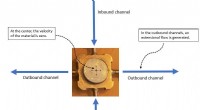
2. Permeability: Porous materials can be permeable, allowing fluids (liquids or gases) to flow through them. This is crucial for:
* Filtration: Separating particles or substances based on size or chemical affinity.
* Fluid transport: Allowing controlled movement of fluids in various applications.
3. Mechanical Properties: The presence of pores can affect the mechanical properties of the solid:
* Lightweight: Pores can create a more open structure, reducing the material's density.
* Compressibility: Pores can compress and deform under pressure.
Examples of Porous Solids:
* Natural: Rocks, soils, wood, bones
* Man-made: Ceramics, polymers, metals, aerogels, foams
Applications of Porous Solids:
* Building materials: Insulation, lightweight concrete
* Filters: Water purification, air filtration
* Catalysis: Chemical production, environmental cleanup
* Energy storage: Batteries, fuel cells
* Biomedical devices: Drug delivery, tissue engineering
Key Takeaways:
* Porous solids have interconnected pores throughout their structure.
* These pores increase surface area, leading to enhanced properties.
* Porous solids can be permeable, allowing fluid flow.
* They have diverse applications, from filtration to energy storage.
Understanding porous solids is essential for various fields, including materials science, engineering, and environmental science.