* Solid State: In a solid, particles are tightly packed and held together by strong intermolecular forces. They vibrate in fixed positions, with limited freedom of movement.
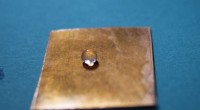
* Melting: When a solid absorbs energy (usually heat), its particles gain kinetic energy. This increased energy causes the particles to vibrate more vigorously. Eventually, the vibrations overcome the intermolecular forces holding them in a fixed lattice structure.
* Liquid State: As the particles break free from their fixed positions, they become more mobile. They can slide past each other, giving the liquid its fluidity. The particles are still relatively close together, but they have greater freedom of movement compared to the solid state.
In short, melting is the process where the particles gain enough energy to break free from their rigid structure in the solid state and transition into the more mobile liquid state.