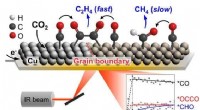
1. Nondispersive Infrared (NDIR) Spectroscopy:
* Principle: This is the most common method for measuring CO2 concentrations in the air. It relies on the fact that CO2 absorbs infrared radiation at specific wavelengths.
* Applications: Widely used in environmental monitoring, air quality analysis, greenhouse gas monitoring, and industrial processes.
* Advantages: High accuracy, good sensitivity, relatively low cost.
* Disadvantages: Can be susceptible to interference from other gases, requires calibration.
2. Gas Chromatography (GC):
* Principle: Separates different gases in a mixture based on their boiling points and interactions with a stationary phase.
* Applications: Primarily used for analyzing complex gas mixtures, including those found in industrial emissions and environmental samples.
* Advantages: High sensitivity, can identify and quantify multiple gases simultaneously.
* Disadvantages: More complex and expensive than NDIR, requires skilled operators.
3. Non-Dispersive Ultraviolet (NDUV) Spectroscopy:
* Principle: Uses UV light absorption to measure CO2 concentrations.
* Applications: Used in automotive emissions testing and some industrial processes.
* Advantages: Compact, portable, relatively low cost.
* Disadvantages: Lower sensitivity compared to NDIR, can be susceptible to interference from other gases.
4. Chemical Methods:
* Principle: Involve chemical reactions that produce a measurable signal when CO2 is present.
* Applications: Can be used for field testing and some specific applications.
* Advantages: Relatively simple and portable, sometimes more cost-effective.
* Disadvantages: Less accurate and sensitive compared to NDIR or GC, may require special reagents.
5. pH Measurement:
* Principle: CO2 dissolved in water forms carbonic acid, lowering the pH.
* Applications: Measuring CO2 dissolved in water, such as in aquatic environments or beverage production.
* Advantages: Simple and cost-effective.
* Disadvantages: Less accurate than other methods, affected by other factors that can influence pH.
Choosing the Right Test:
* Accuracy required: Consider the level of precision needed for your application.
* Target concentration: The concentration range of CO2 you expect to measure will affect the choice of method.
* Cost: Budgetary constraints will influence your decision.
* Complexity: The level of expertise and resources available will determine the feasibility of different methods.
* Portability: Field applications may require a portable instrument.
It's important to consult with a qualified expert or analytical laboratory to choose the most suitable method for your specific needs.