At the most basic level:
* Matter: All substances are made up of matter, which is anything that has mass and takes up space.
* Atoms: Matter is composed of tiny particles called atoms. Atoms are the building blocks of everything around us.
Moving to more complex levels:
* Elements: An element is a pure substance made up of only one type of atom. Examples include gold (Au), oxygen (O), and carbon (C).
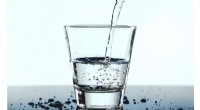
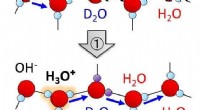
* Molecules: Two or more atoms chemically bonded together form a molecule. Water (H₂O) is a molecule made up of two hydrogen atoms and one oxygen atom.
* Compounds: A compound is a substance formed from two or more different elements chemically combined in a fixed ratio. Salt (NaCl) is a compound made up of sodium and chlorine.
* Mixtures: A mixture is a combination of two or more substances that are not chemically bonded. They can be separated by physical means. Examples include sand and water, or air (a mixture of gases).
Beyond the basics:
* Phases of matter: Substances can exist in different states or phases, such as solid, liquid, or gas. The state of a substance is determined by the arrangement and movement of its particles.
* Properties: Substances have specific properties that can be used to identify and classify them. These properties can be physical (like color, density, or melting point) or chemical (like reactivity or flammability).
So, to answer your question directly, a substance consists of:
* Matter: Made up of atoms.
* Elements: Pure substances composed of one type of atom.
* Molecules: Two or more atoms bonded together.
* Compounds: Two or more different elements chemically combined.
* Mixtures: Combinations of substances that are not chemically bonded.
Let me know if you'd like a more in-depth explanation of any of these concepts!