1. Simple Diffusion: This is the passive movement of molecules from an area of high concentration to an area of low concentration. This movement doesn't require any energy and is driven by the concentration gradient. Small, uncharged molecules like oxygen, carbon dioxide, and water can pass through the membrane via simple diffusion.
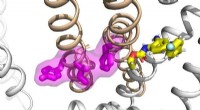
2. Facilitated Diffusion: This is also a passive process, but it involves the assistance of membrane proteins. These proteins act as carriers or channels, helping larger or charged molecules to cross the membrane. This process still relies on a concentration gradient but requires the presence of specific proteins for the molecule to move through the membrane. Examples include glucose transport into cells.
3. Active Transport: This is an energy-requiring process that moves molecules against their concentration gradient, from an area of low concentration to an area of high concentration. This process requires the use of specific membrane proteins and energy (usually from ATP) to move molecules against their natural tendency. An example is the sodium-potassium pump, which maintains the electrochemical gradient across cell membranes.
In summary, simple diffusion, facilitated diffusion, and active transport are the three main ways molecules move across a semipermeable membrane.