* Boron's Electron Deficiency: Boron has only three valence electrons, and it needs four to complete its octet.
* Hydrogen's Lone Electron: Each hydrogen atom has one electron to contribute to the bond.
* Electron Sharing: Boron shares its three electrons with three hydrogen atoms, forming three B-H bonds. However, there aren't enough electrons to form conventional two-electron covalent bonds.
* Three-Center Two-Electron Bonds: To overcome this, the boron atom forms a special type of bond called a three-center two-electron bond. In this type of bond, the two electrons are shared between three atoms.
Simplified Explanation:
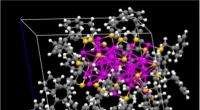
Imagine the boron atom at the center of a triangle, with a hydrogen atom at each corner. The two electrons are shared equally among the three atoms, creating a "banana-shaped" cloud of electron density.
Important Note: Borane (BH₃) is highly reactive and exists primarily as a dimer, diborane (B₂H₆). Diborane also features three-center two-electron bonds, but its structure is more complex.